

Why Austin, Texas Is Becoming One of America's Best Locations for Commercial Greenhouse Farming
Austin, Texas has often been talked about as a tech hub, a music city, and an attractive place for startups and talent. Less often highlighted, but increasingly important for inter...
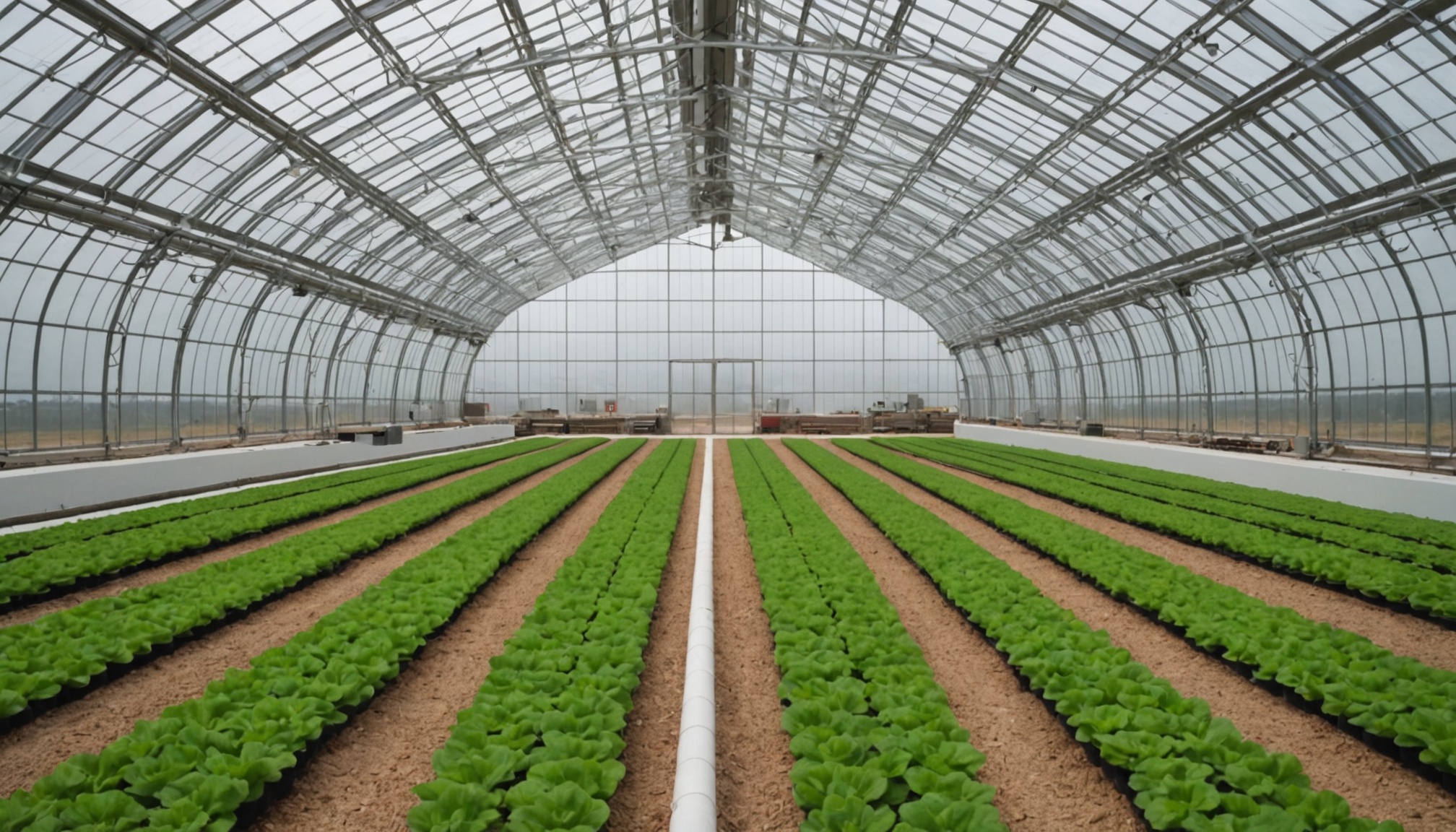
Austin, Texas has often been talked about as a tech hub, a music city, and an attractive place for startups and talent. Less often highlighted, but increasingly important for international businesses, is Austin’s growing role as a practical and strategic location for commercial greenhouse farming. For companies that produce vegetables, herbs, leafy greens, specialty fruits, and controlled‑environment agriculture technologies, Austin combines market proximity, distribution access, a food‑savvy buyer base, and pragmatic business conditions that together make it one of the most attractive U.S. bases today.
This article examines why Austin deserves attention from international growers and AgTech providers considering U.S. expansion. We explore the demand drivers (population growth, restaurants, and retail buyers such as Whole Foods and H‑E‑B), the physical and regulatory context (climate, water and land availability, permitting), the logistics and distribution advantages, and why many companies are choosing Texas over California. Along the way we highlight the realistic upside and the operational caveats, because winning in the U.S. market requires both market access and disciplined execution. Finally, we describe how a professional local representation model, like MarketBrug’s U.S. Representative services based in Austin, can shorten the market entry path without the time and cost of opening a full U.S. office.
Why Austin matters to commercial greenhouse farming?
Austin’s rapid population growth and expanding metropolitan footprint create steady, diversified demand for fresh produce. The city is an employment and cultural magnet that draws professionals, families, and students; that demographic mix drives robust restaurant traffic and a steady stream of consumers willing to pay premium prices for quality and provenance. For greenhouse operators, proximity to customers matters: freshness, shelf life and rapid replenishment cycles materially affect margins and buyer relationships. Serving a dense, high‑value market from a nearby greenhouse lets growers sell fresher product, reduce transport costs and shrink lead times, advantages that translate directly into stronger commercial offers for restaurants, specialty grocers, and foodservice operators.
Retail buyers that matter: Whole Foods and H‑E‑B
Two retail names matter when you evaluate opportunities in Texas for fresh, premium produce. Whole Foods Market, founded and headquartered in Austin, remains a major buyer of specialty produce and local brands. A provenance story tied to local or regional production resonates with their purchasing teams and with many of their shoppers. For an international supplier or greenhouse operator, being physically present in the Austin region makes it simpler to get in front of category buyers, arrange in‑store demos, and build the trust needed to secure initial listings.
H‑E‑B, privately held and headquartered in San Antonio, is one of the largest and most influential grocery chains in Texas. Though its reach is strongest across Texas, H‑E‑B’s scale and supplier approach mean that regional supply reliability and competitive pricing are crucial. Austin’s proximity to H‑E‑B’s network and to other Texas supermarkets reduces the complexity of multi‑chain distribution and opens routes to volume business once a supplier proves reliability and landed cost.
A food culture that buys quality
Austin’s restaurant scene is another critical demand driver. From high‑end farm‑to‑table operations to fast‑casual concepts seeking local differentiators, restaurant buyers place a premium on consistent, flavorful produce that can be billed as local or regional. Chefs often value tight supply chains that allow rapid menu changes and guaranteed delivery windows, features that greenhouse operators can deliver better than distant field growers. For international newcomers, building restaurant relationships is both an entry channel and a showcase: chefs will test product, give immediate sensory feedback, and act as influential advocates when products perform.
Climate and the greenhouse value proposition
Austin sits in a climatic zone that presents both opportunity and challenge. The region enjoys a long growing season, which is attractive for year‑round production of many leafy greens, herbs, and other greenhouse crops. However, Texas summers are hot and periods of drought are recurrent. Those conditions make open‑field production riskier, shift irrigation costs higher, and increase the appeal of controlled‑environment agriculture (CEA).
Greenhouses and other CEA systems mitigate climatic extremes by enabling environmental control, pest management, and water‑use efficiency. Compared with many open‑field systems, well‑designed CEA operations in Texas can reduce water use per kilogram of produce, increase yield per square meter and compress time to harvest cycles, advantages that make greenhouse-grown crops more commercially predictable. Because energy use is higher in CEA, operators that pair greenhouse systems with flexible energy strategies, on‑site solar, demand management, and careful HVAC design, can manage costs while maintaining quality standards.
Water: scarcity, efficiency and technology
Water is rarely a neutral topic in Texas agriculture. The state’s periodic drought cycles and the economics of groundwater management mean that any new agricultural investment must account for long‑term water risk. For greenhouse farming, however, the narrative is different. Modern greenhouse and hydroponic systems are engineered to recycle and reuse water, recover condensate, and deliver precise nutrient dosing. These efficiencies can reduce total water demand compared with open‑field production on a per‑unit basis.
That said, greenhouse developers must still secure reliable water rights or municipal supply connections and plan for the institutional reality of Texas water law, which varies by watershed and groundwater district. Local water utility rates, irrigation district rules, and permitting timelines factor into site selection and underwriting models. In short: CEA reduces water risk materially but does not eliminate the need for careful water planning.
Land availability and cost tradeoffs
One of Austin’s fundamental advantages vs. many coastal California markets is land availability and relative cost. Land prices in and around Austin are typically lower than in the prime agricultural counties of California’s Central Valley and coastal regions, especially for sites within a reasonable haul radius of Houston or Dallas. That affordability allows growers to build larger, more efficient greenhouse footprints or to prototype vertically integrated models that combine production with packing and cold storage.
When evaluating land, international businesses should weigh three interrelated factors: proximity to buyers, access to utilities (water and power), and zoning/permitting constraints. Sites that are slightly further from downtown Austin but adjacent to major logistics corridors (such as the I‑35 and SH‑130 corridors) often hit the best balance: lower land cost while retaining fast access to metropolitan demand and regional distribution networks.
Distribution and logistics: serving Texas and beyond
Austin benefits from strategic logistics infrastructure. Austin‑Bergstrom International Airport supports rapid shipments for high‑value perishables, while the interstate network connects the city efficiently to major Texas metros and into the Midwestern and Southeastern U.S. Rail and truck freight hubs in Houston and San Antonio are within a few hours, offering routes to ports for export and cross‑country distribution. For producers targeting rapid delivery to restaurants and retailers, same‑day or next‑day truck lanes to nearby distribution centers are a major commercial asset.
From a distribution perspective, greenhouse growers that locate near Austin can serve immediate metro markets and scale up to supply regional distribution centers for chains such as Whole Foods and H‑E‑B. For international entrants, the ability to promise consistent, short lead times while demonstrating traceability and food‑safety systems is the ticket to larger contracts.
Why Texas instead of California? Tradeoffs and strategic choices
California has led U.S. specialty produce for decades, its climate, irrigation infrastructure and agricultural expertise are unmatched for many crops. Yet California has become more expensive and operationally complex in ways that change the economics for international investors.
Several practical differences encourage companies to consider Texas as an alternative:
- Cost of land and development: California’s agricultural land is among the most expensive in the U.S., and regulatory costs add to the build‑out expense. Texas typically offers lower land prices and a friendlier development climate for industrial and agricultural buildings.
- Labor and operating costs: California’s labor market and regulatory environment have led to higher wage and compliance costs in many agricultural sectors. Texas’s labor market and lower state regulatory burden can reduce ongoing operating expenses.
- Water policy and concentration risk: California’s water challenges, complex allocation rules, groundwater sustainability mandates and reliance on distant water conveyance systems, create institutional risks that can affect long‑term water reliability. Texas has its own water challenges, but the different institutional context and local groundwater management approaches can make long‑term planning more straightforward for some operators.
- Market proximity and logistics: For companies targeting the U.S. South and Southwest, Texas offers closer access and shorter truck distances than California, especially when serving major population centers in Texas, the South, and the central United States.
These tradeoffs do not mean Texas is superior in every situation. California still leads for certain high‑volume field crops and for historical supplier ecosystems around particular commodities. The point for international investors is strategic fit: if your product is oriented to nearby metropolitan consumers, restaurants, specialty retailers and regional distribution centers, Texas, and Austin in particular, may provide a faster, lower‑capital path to scale.
Operational realities and commercial risks
No region is without tradeoffs. Austin’s growth is a double‑edged sword: rising real estate values and urban development pressure can push agricultural land further out, increasing haul distances. Summer heat increases cooling energy needs for greenhouses; the Texas grid can be volatile during peak demand periods, which requires robust energy planning. In addition, the permitting environment at the city and county levels must be navigated carefully, greenhouse complexes require zoning approvals, building permits, and sometimes special use permits depending on location.
Successful operators address these realities in three ways: site diligence that prioritizes secure utility access and sensible haul distances; investment in energy‑efficient greenhouse design and on‑site generation or resilience measures; and early engagement with local authorities and utilities to reduce permitting friction. Organizations that underwrite these items up front avoid the headaches that delay production and increase costs.
Market channels: whom to sell to first
For international greenhouse operators entering the Austin market, a staged commercial approach usually works best. Restaurants and high‑end grocers provide initial, higher‑margin opportunities to prove product quality and build brand awareness. Specialty buyers and chefs will pay for taste, novelty and provenance and are often the first to try new suppliers. With documented food safety practices and reliable logistics, a grower can convert restaurant success into retail listings and then into distribution agreements.
Whole Foods offers a distinctive channel because of its Austin headquarters and buyer base, particularly for brands and items positioned on quality and locality. Regional chains such as H‑E‑B require consistency at scale; once a supplier proves capacity and reliability, they can open larger volume opportunities. In addition to these traditional channels, institutional buyers, university dining systems, hospitals and corporate cafeterias, represent steady demand for year‑round produce and can be relatively low‑stress customers for new suppliers.
Technology and value‑add opportunities
Greenhouse operators in Austin can also build adjacent revenue streams. Value‑added processing (washed and packaged salads, baby greens, cut herbs), co‑packing, and cold‑chain services increase product shelf life and create higher‑margin SKUs for retail and foodservice customers. For AgTech companies, Austin is a receptive testbed: local growers and research institutions are open to pilot projects that demonstrate yield improvements, sensor integration, or energy optimization.
The Texas market’s scale also invites partnerships: growers can collaborate with local distributors, co‑ops, and processors to reach broader channels without reinventing logistics. That partnership model reduces capital intensity and creates commercial optionality for international entrants.
Regulatory and food‑safety considerations
Entering the U.S. market requires compliance with federal food‑safety standards, including the FDA’s preventive controls and traceability expectations. For greenhouse operators, implementing a robust food‑safety plan (including GAPs where relevant, sanitation programs, and traceability systems) is essential before approaching large buyers. Retailers and distributors will typically require audits, documentation and sometimes third‑party certifications.
Permitting and local regulatory engagement are also practical considerations. Zoning, water permits and building codes vary across municipalities and counties. Engaging with planning departments, utility providers and local extension agents early shortens timelines and reduces unexpected costs. Familiarity with these processes is one reason a local representative can add immediate value to an international firm’s entry strategy.
Future opportunities and scale economics
Looking ahead, several forces amplify Austin’s attractiveness. Continued population growth and the expansion of nearby metro markets will increase demand for fresh produce. Advances in greenhouse automation, lighting efficiency and integrated pest management lower per‑unit production costs over time. As distribution networks evolve and consumers prioritize local supply chains, growers who can guarantee freshness and rapid replenishment will capture higher margins.
Moreover, the strategic location of Austin along the I‑35 corridor makes it a hub for distribution between north and south markets, including cross‑border trade with Mexico when export is part of a company’s plan. For producers who can combine local market penetration with scalable production models, Texas offers pathways to national distribution without the capital intensity that a California footprint might require.
Where MarketBrug fits: practical U.S. entry from an Austin base
For many international companies the core challenge is not only whether Austin is a good place to produce, but how to establish credible commercial presence and move quickly enough to test hypotheses about buyers, pricing and logistics. MarketBrug helps close that gap.
Based in Austin, MarketBrug acts as your accountable local representative for customer meetings, retail and distributor introductions, trade shows, and operational due diligence. Instead of opening a U.S. office and hiring full‑time staff, international greenhouse operators and AgTech vendors can use MarketBrug to achieve three practical goals: present a professional American face to buyers, run prospecting and procurement cycles with local knowledge, and validate commercial models before committing major capital.
A pragmatic MarketBrug engagement looks like this in practice: we help international suppliers set up buyer meetings with regional grocery chains and retail category managers; we represent the company in chef and restaurant tastings; we coordinate logistics tests with local distributors to validate lead times and landed costs; and we work through local permitting introductions so site selection moves faster. Because MarketBrug operates from Austin, these activities are grounded in real access to buyers like Whole Foods and major regional chains such as H‑E‑B, and in local market intelligence about pricing, packaging expectations and seasonal demand.
For AgTech companies, MarketBrug can facilitate pilot programs with local greenhouse partners, connect you with co‑packers or cold‑storage providers, and represent you at regional conferences and trade shows to accelerate lead generation. Our role is not to replace a permanent U.S. team, but to be a professional bridge that lets you test the market, prove product‑market fit, and build pipelines without the overhead of a full U.S. entity.
Practical next steps for international companies:
If you are an international grower or AgTech vendor evaluating Austin as an entry point, start with a staged, pragmatic strategy:
- Validate demand locally: run chef tastings, in‑store demos, and small pilot shipments to regional distributors to confirm pricing tolerance and quality expectations.
- Prioritize site diligence: secure water availability, utility capacity, zoning clarity and sensible haul distances to metropolitan buyers.
- Design for energy and water efficiency: greenhouse design choices, HVAC strategies and renewable energy options will shape operating margins.
- Prepare food‑safety documentation: buyers in the U.S. expect traceability and documented sanitation and preventive‑controls plans.
- Use local representation to accelerate access: an accountable local partner can set up meetings, manage introductions, and handle early compliance and permitting engagement while your team focuses on production and product refinement.
Conclusion: a strong, pragmatic case for Austin
Austin’s combination of a growing, quality‑focused market, proximity to influential retail buyers, and more affordable land and development conditions make it an attractive option for commercial greenhouse farming. Climate and water considerations create operational demands that favor controlled‑environment approaches, while distribution links and a vibrant restaurant scene create immediate commercial pathways. Texas offers a different tradeoff than California, less concentration of historical agricultural infrastructure, but lower capital thresholds and stronger proximity to broad domestic markets.
For international companies, the practical route to success is staged and evidence‑driven. Use pilots to prove product and logistics, prioritize water and energy resilience in design, and engage a local representative to shorten the time to buyer meetings and commercial validation. MarketBrug’s Austin‑based U.S. Representative services are designed precisely for that purpose: to give international suppliers a credible, professional U.S. presence that accelerates introductions, shortens sales cycles, and reduces the risk and cost of going it alone.
If your plans include greenhouse production or AgTech pilots in the U.S., consider the economics and commercial access Austin offers, and take a staged approach to validate the market. The region is far from a no‑risk choice, but for companies that pair rigorous site diligence with disciplined market testing, Austin is one of America’s most promising locations to build a scalable greenhouse business.